December 2, 2010
It is with great sadness we report that the Ingraham Trees LUPA case in Superior Court was decided, the result being that the Ingraham Trees may be removed. We have until December 9, 2010 to appeal this decision to the Court of Appeals. We would greatly appreciate letters be sent to the following groups to express why the trees should remain. This includes educational value, filtration vaue for water and air and social value for the neighborhood and the City.
The following links will help to get our message out.
The Seattle City Council contact site:http://www.seattle.gov/council/councilcontact.htm
The Seattle School Board:http://www.seattleschools.org/area/board/contact.xml
The City of Seattle Department of Planning and Development:
Diane Sugimura, Directormailto:Directordiane.sugimura@seattle.gov
And the Mayor's office:http://www.seattle.gov/mayor/contact.htm
At this point phone calls (all the phone numbers are at each of the above links) may be more effective than email, but either way the message is to save the Ingraham Northwest Grove. Move the addition to another place on campus. And request they be better stewards for our environment here in the Northwest.
Tell Your Friends.
August 9, 2010
Latest Battle is for an effective Tree Ordinance for the City of Seattle. One way to accomplish this is by participating in comments to the Urban Forestry Commission, and by emailing City Council:Here is the current Meeting where the Department of Planning and Development version of a tree ordinance was discussed by the Urban Forestry Commission plus comment by Michael Oxman: First the DPD proposal: City of Seattle Proposed Tree Regulations -full text at DPD website.Second The Urban Forestry Commission comments: Video of the 8-4-2010 Urban Forestry Commission meeting attached here: http://www.youtube.com/watch?v=Z-V8lv-XnPk
Finally Michael Oxman comments:
7 of the 9 commissioners gave the proposal an emphatic thumbs down last Wednesday.
The proposal incorrectly refers to a meeting of Environmental & Tree Advocates I attended on March 12, 2008, as having somehow endorsed this proposal. http://www.seattle.gov/trees/docs/Commission_docs/Tree_Advocate_Meeting_Summary.pdf
The Interim Tree Ordinance is designed to sunset after introduction of a comprehensive proposal, which this is not.
It does not address the 5 problems with our municipal tree program found by the Seattle Auditor on May 15th, 2009 http://www.cityofseattle.net/audit/docs/PublishedReport20090515.pdf
The proposal seeks to implement the Green Factor, featured on page 47 of the 2007 Urban Forest Management Plan, which the City Council has repeatedly refused to adopt.
The proposal does not discuss the discrepancy of 40% of the city that should be covered by tree canopy cover, according to the Comp Plan, as opposed to the 30% canopy cover goal adopted by staff.
We are rather far apart, thousands of acres of tree canopy apart. The real issue is fear by elected officials that they will get voted out by folks who feel tree ownership is a private property right.
The reality is that tree removal permits are required in all the communities around Seattle. Our antique tree ordinance was weak when it was adopted in 2001. It's time to get code compliance, and a Mayor that can stand up to the department heads who hold the real power in this town.
The Seattle corporate welfare program is to give the gift of tree root zones contained in setbacks to developers. Constructing valuable buildings where roots are now growing is a misguided way to stimulate the economy.
Arboreally yours,
Michael Oxman
(206) 949-8733
http://www.saveseattlestrees.com/
Hello Fellow Tree Advocates,The Seattle Department of Planning and Development (DPD) has released it's proposed revisions to Seattle's urban forestry protection laws. It's most regressive step would be the elimination of any protection for exceptional trees and tree groves and would essentially rescind Director's Rule 16-2008. It opposes a permit system, which would help stop the current loss of trees by requiring review before trees could be cut down. A permit system is vital to tracking what trees and how many are being cut down. DPD's overall proposal represents a major step backwards in efforts to protect our trees and urban forest. We need to get organized now to advocate a citizen's alternative to DPD's proposal, one that puts emphasis on protecting our urban forest. Unless we do, DPD's proposal or a slightly modified version of it will go before the Seattle City Council for a vote. Save the Trees-Seattle, which has led the fight to save the trees at Ingraham High School, supported the interim ordinance to protect trees and habitat, and which advocated for the successful creation of an Urban Forestry Commission, along with the Maple Leaf Community Council which lead the effort to save Waldo Woods and took a lead in drafting the interim tree ordinance, are taking the lead on organizing the creation of a coalition effort to draft a citizens version of a new urban forest and tree ordinance. You are invited to attend an organizing meeting for the formation of this coalition effort which will include a workshop on key elements needed for a successful urban forest and tree protection ordinance. The meeting will be held Sunday, August 8, 2010 from 1:30 PM to 4:30 PM at the Broadview Public Library at 12755 Greenwood Ave N. Please let us know if you will be able to attend. It is vital that we get strong community representation from a number of groups but concerned individuals are also urged to attend. Please recommend others that you think should be invited. Please rsvp to Steve Zemke at stevezemke@msn.comto let us know if you will be able to attend. Please review the material below and also send suggested items you would like to see considered in a new tree ordinance. We will discuss these provisions at the organizing meeting. Below is a list of documents relevant to Seattle urban forest, DPD's proposal and various articles on creating an effective urban forest and tree protection resolution. Also there are links to other cities ordinances and a beginning list of basic provisions for discussion purposes regarding any new tree ordinance for Seattle.Here is the summary of the "City of Seattle's Proposed Tree Regulations" report as prepared by DPD
Here is the full proposal entitled "City of Seattle Proposed Tree Regulations" from the DPD's website:
Here is the "Summary of Pacific Northwest Municipal Tree Regulations" prepared by consulting arborist Elizabeth Walker of Sound Tree Solutions & DPD. This summary includes a matrix of some of the various components of tree regulations in place in other cities.
"Management of City Trees Can be Improved"Office of City Auditor of Seattle, May 15, 2009This report details many of the problems regarding how Seattle currently regulates trees and our urban forests, including the fact that "The City's management is decentralized among 9 City Departments with tree management or regulatory responsibilities" A Guide to Community and Urban Forestry ProgrammingJune 2009, Washington State Department of CommerceEvergreen Communities Partnership Task Force Urban Tree Conservation: A White Paper on Local OrdinancesSept 2007, Montgomery Tree Committee. 68 pagesThis paper deals with ”conservation of urban forests on private land” and is one of the best overviews I have found. It discusses and compares many different ordinances and approaches it from a holistic viewpoint, looking not just at trees but also biodiversity and ecosystem concerns. Tree Ordinance Development Guidebook Sept 2005 by the Georgia Forestry Commission, Urban and Community Forestry Program. 25 pages This Guidebook is not very long but it has a good overview, including a Tree Board/Tree Ordinance Evaluation, and a Resource List. Guideline for Developing and Evaluating Tree OrdinancesInternational Society of Arboriculture, Oct 2001. 181 pages a real compendium of information on tree ordinance issues Here is a quick list of items of provisions that Save the Trees-Seattle thinks should be included in a new urban forestry and tree protection ordinance for Seattle: 1. It needs to be comprehensive - cover both public and private sector. DPD proposal only deals with private sector. 2. It must protect exceptional trees and groves of trees. DPD's proposal eliminates these protections and substitutes incentive approach without any specifics. 3. It must have a permit system to remove any tree 6 inches or larger in diameter on public or private property. 4. Tree management needs to be consolidated in the Department of Sustainability and Environment. Currently 9 city agencies deal with trees and tree protection is not a priority for some agencies like DPD whose mission is to help development occur. 5. All arborists and tree cutting operations must be licensed by the city and undergo training before being able to cut trees. Violation of the urban forestry and tree ordinance's protection for exceptional trees would result in fines and/or revocation of their license to do business in the city. 6. Canopy cover needs to be defined as canopy volume not just area. The actual size of trees matters. 7. Native trees and vegetation need to be given a priority to help preserve native animal, bird and insect life as well as native plants.. 8. Habitat, wildlife and ecological processes and their protection need to be emphasized. 9 Requests for permits to remove trees must be posted on the internet; and in a physical location visible to the public and near the tree for one one week prior to cutting and for one week after a tree is cut. Here is another list produced by David Miller of the Maple Leaf Community Council I've made my first read through the tree regulations proposed by DPD. Here are some intitial thoughts...Tree advocates knew the 2007 canopy review was going to be trouble. This report proves it. I encourage you to look at the neighborhood specific data at the following two links and give them a gut-check analysis:http://www.seattle.gov/trees/docs/canopy_cover_all_zones.pdfhttp://www.seattle.gov/trees/docs/neighborhoodcanopycovertable.pdfDo you think these changes accurately reflect the net amount of tree planting and tree cutting in your neighborhood?We need to understand how the 1987 18% number was calculated and make certain we're comparing apples to apples. I do not believe that to be the case, and solving this question is an absolutely priority to the entire conversation about a tree regulations.Why? Fundamentally, DPD focused on streamlining regulations instead of increasing protection for trees. The reason for this is stated several times in the proposal document -- We increased our canopy from 18% to 22.9% so our current regulations are doing just fine. While we've done a great job on street tree planting, and the report acknowledges effectively all canopy growth came from street tree planting, I think most tree watchers would agree we've lost far more trees on parcels than the 18% -> 22% analysis would suggest.Here are some other thoughts on the proposal:1. Abandonment of all protections for exceptional trees is unacceptable.2. The approach by DPD of a tree credit system is interesting, and might have merit moving forward in combination with other strategies.3. The abandonment of tree regulations in anything other than single-family zones in favor of substitution of the "green factor" is a real problem because the green factor rules are largely ineffective at tree canopy use.4. Allowing single family homeowners to pay out of planting trees is so problematic and inequitable it should be removed from consideration.5. There is a complete disregard for systems due to no mention of tree groves. Interestingly, it is not even mentioned in the report as something currently protected under city rules, so there is no analysis of the impact of removing this hard-won feature of tree protection regulations.6. The entire proposal is written on the assumption that anything we build has priority over anything that grows. This is problematic.7. The analysis of tree permitting and subsequent disposal of a cut permit idea ignores the potential benefit of making tree cutting companies liable for removal of trees without a permit. Nearly all of the objections concerning enforcement listed are solved if the company removing the trees is the one held financially liable if no permit is obtained.8. The city continues to make recommendations to move design-based development decisions out of a public and into an administrative process. This works only if the administrators are especially enlightened and well trained. This is not the current case in Seattle and effectively makes the fox in charge of the henhouse.9. It appears none of the experiences of surrounding communities, almost all of which have stronger tree rules, were taken into consideration.10. Rule changes are too often rationalized by claims the current rules are cumbersome and not working. As any of us who have tried to fight bad development know, the current rules are not regularly followed by DPD personnel. Lack of training and proper enforcement is not justification for removing protections.11. The native/non-native designation is wholly inadequate in addressing the fundamental qualitative differences between coniferous and deciduous trees. Replacing Seattle's coniferous canopy with a deciduous one is unacceptable and damaging. It is expensive in its deleterious effect on storm water retention and harmful to threatened species in our midst.Fortunately, there are some great tree people on the UFC. Combined with the expertise here and in Seattle's broader tree community I think we can make modifications to the proposal that make sense for our tree canopy. I'll repeat, however, the first thing we need to do is get to the bottom of how an 18% tree canopy cover turned into a 22.9% cover despite widespread lack of enforcement of canopy goals.=============================================David MillerMemberMaple Leaf Community Council Executive Boardhttp://www.mapleleafcommunity.org/ continued by Steve Zemke: I know this is a lot of stuff but I wanted to put it in one place rather than a series of e-mails. Wed. August 11, 2010, from 3-5 PM the Urban Forestry Commission will meet as a whole and discuss their comments they will make on the proposal. This meeting will also be in the Seattle Municipal Tower, 700 5th Ave
Rm 2240. Steve Zemke ChairSave the Trees - Seattlestevezemke@msn.com206-366-0811
__._,_.___
April 28, 2009 The Environment, Emergency Management and Utilities Committee of the Seattle City Council met on April 28th. The agenda included an update of the Urban Forest Management Plan. A new Satellite imagery of the City Tree Canopy was performed in 2007, and is discussed. The importance for retaining our current tree canopy is brought up as compared to an overemphasis on planting trees. To find out more about this very important topic go to: Urban Forestry Management Plan Tree Canopy Assessment Briefing.
Save the Trees welcomes information regarding Tree Battles throughout the Emerald City. Our goal is to Save Trees where ever it can be done. We recognize the need for housing, and look for alternatives to clear cutting a lot. We recognize the need for education, yet ask for a reasonable alternative to destroying trees to building and increased lot coverage. We do not want to control the property rights of others, we want to educate the public and allow for informed decisions to be made. Seattle has lost canopy coverage. And it continues to. We are concerned that this continual loss without recognition of the perils that come with it, will cause the death of a City. Not in a way we often consider death. But a death of heritage, tourism, health, vibrancy, and our souls ..our uniqueness as part of the Northwest is built upon our heritage as having Evergreen Trees, and plenty of them--of being the Emerald City. Our heritage is not built on looking like Chicago, San Diego, Denver, or New York...each individual, each with their own reputation and heritage. With every mature tree removal, so goes our heritage. It takes time to build a name... It takes only minutes to destroy it. We look for realistic answers. We see the world with trees now.We want those trees for the future.What about the heritage?Grandpa planted this tree when he was 5,Dad played in and around it.Will Grand child?Will Great Grandchild?A Douglas Fir can live past 4 generations. Our City has lived past 4 generations with trees...but since the 1980's has lost 40% of its trees. We haven't replaced them. In 29 years we haven't replaced them, 1/4 of a century. We are still reducing our canopy--it will take over 20 years for the "replacements" of today's loss to even begin to look like a tree with a canopy. 1/2 Century. Where are we going? Tree loss is growing, tree canopy is declining, keeping is easier than replanting, yet we consistently remove.
Many TREE BATTLES involve comments to the Department of Planning and Development (DPD), below are the Tips on Making Effective Comments, as suggested by the DPD themselves.Although the quantity of letters DPD receives regarding land use activities may indicate the extent of neighborhood or agency interest, it is the relevance of the comments—the information they contain—that will most affect a project’soutcome. Here are some tips on making your comments effective:
Briefly explain who you are and why you are interested in the project.
State your concerns clearly and succinctly using objective language.
Comment only on issues relevant to the decision being made.
State opinions and preferences, ask questions, and propose alternative solutions to particular issues. State informed opinions and, where possible, include data to support your opinion.
Review the project’s technical reports or Environmental Impact Statement (EIS) data, comment on conclusions, assumptions and the data collecting methods.
Keep focused on your objective. You want DPD to hear your concerns and be compelled enough to investigate further.
Identify the topics you want to include in your letter and how you want to organize them.
Ask for studies that you think are important but have not been provided.
If the proposed project is subject to SEPA and you think it will have significant environmental impact, request that an EIS be prepared.
Provide your own information.
Identify project features that you like and think should not be changed.
Provide any comments about the project’s compliance with the Land Use Code.
Ask to be added to the project mailing list and request a copy of the notice of decision. (Copies are sent via U.S. mail, so please provide your mailing address when making request.)
ALWAYS PLACE THE PROJECT NUMBER ON ALL CORRESPONDENCE! ADD THE ADDRESS TO THE PROJECT IF KNOWN. ALWAYS KEEP COPIES OF YOUR CORRESPONDENCE.
The New Story on BIG RED
6/8/09 Great news about BIG RED
by Michael Oxman
http://www.seattle.gov/dpd/AppDocs/GroupMeetings/DRProposal3004423AgendaID2732.pdf
Next Monday nite at the University Heights Center is the Big Red review for a Recommendation at the Design Review Board meeting. The above web link to the DPD website shows the building setback from the tree at 30' away from the trunk. As recently as the May 4th meeting (report), the tree was invisible on these blueprints.
This is a tremendous victory handed to the appellants by the Hearing Examiner. The Order to Remand the project back to the DRB in response to a pre-appeal motion has resulted in the developer caving in to the pressure applied by the neighbors' appeal to save this Western Red Cedar with a 4 foot diameter trunk.
If any of us can attend to support the appellants, it would help a lot to have a big crowd speak during the Public Comment period.
Try to keep from chortling with glee too loudly, as the developers scurry headlong back to their drawing boards. Wear earplugs or iPod headphones to drown out the grumbling as the developers lament their lost profit from selling out the rootzones of the trees they thought they had nearly converted into cash. Congratulate the members of the Design Review Board, as they thwart yet another failed attempt at a land grab of the urban forest heartland of America.
I don't know what time the agenda item will come up.
Arboreally yours,
Michael Oxman
Big Red's Battle, is coming to an end.Not the end we had hoped for or desired. The Big Red Cedar is to meet the doom of the Chainsaw. A warrior's comment:
Big Red's RANT
What was most intriguing to me about the meeting last night [Note from 10 March 2009: this meeting took place at University Heights Community Center on 6 October 2008] was the fear I could smell from the Design Review Board. They were clearly worried that some people would become unpleasant regarding the tree. They went out of their way to address "the tree issue" as soon as they could, to wipe it off the table as quickly as possible. The one woman who spoke out about the tree said she was angry but was letting it go, as it had clearly already been decided. My experience in the past (with the old DCLU) was similar: once they make up their minds, it's a done deal. The fact that this great old tree is partially on public property is simply not an issue. Sigh. Very sad. Very Business as Usual.
I was also struck, listening to the reported recommendations of an arborist associated with the development (he was not present last night), which seem to indicate he hasn't actually looked at the property. Has he? Does he really think that putting in a couple incense cedars will "replace" a 100+ year old western red cedar? [Note from 10 March 2009: I now believe Big Red to be "only" about 80 years old, based on an archival photo from 1937. JHT]
Listening to various comments from neighbors, it became clear that many people are looking forward to this building being constructed. It's a typical, mediocre new building, though the architect and landscape architects went to great lengths to explain how great it will be. Not much permeable surface, generic landscaping where they can fit in a few green things, and a large fence separating the building from the south side neighbors. Of course, it is likely that at some point in the not-so-distant future, the south side will be developed similarly, which will leave no room whatsoever for all the "landscaping" that's being put in on the south side - and will also effectively remove any view of people in this current building. Another aspect is the "common space" planned for the northwest corner. Do they really think that will be anything other than a gathering place for students, taggers, and drug dealers? Call me cynical, but I've lived near the high school for a long time.
It's extremely sad that Seattle developers and architects have so little imagination in their designs and are (in this case) so focused on maximizing their profits at the expense of a wonderful old arboreal member of the community.
Julia Helen Tracy
June 10, 2009
One of many responses from DPD sent to Warriors;
From: Diane Sugimura Subject: Tree at 6515 Brooklyn Ave NE Date: Wednesday, October 22, 2008, 2:48 PM October 22, 2008 Dear Ms. Cox: Thank you for your correspondence and phone messages regarding your concerns about the tree at 6515 Brooklyn Avenue Northeast.
Mayor Nickels also received a copy of your letter and asked me to respond on his behalf.
For nearly a year, we have studied the preservation requirements for the tree through three separate arborist reports. We have thoroughly explored potential changes to the project to accommodate co-existence with the tree. Departures from development standards through the Design Review process have been evaluated. Our conclusion and that of a third party arborist review of the situation is that the tree requires a minimum of 49 feet for a development-free protection zone if it is to survive in the long term.
The proposed project is located in a designated Urban Village, an area zoned for higher density residential development, and is in close proximity to the Roosevelt light rail station. A re-design to protect the tree would reduce the project significantly in terms of the number of residential units possible. After a careful evaluation of all the factors, we have determined that the project cannot proceed consistent with the intent of its zoned potential and designation as an Urban Village, and reasonably retain the tree in a manner that would ensure its long term survival. While this particular situation does not offer a reasonable opportunity for tree preservation, an extensive re-planting phase is part of this proposal, and the addition of extra new trees will partially mitigate the impact of the cedars removal. Thank you. Sincerely, Diiane M. Sugimura, Director City of Seattle Department of Planning and Development 700 Fifth Avenue, Suite 2000 P O Box 34019 Seattle, WA 98124-4019READ ALL ABOUT IT:
Fate of stately cedar has neighborhood divided
Development planned near 90-foot tree
http://seattlepi.nwsource.com/local/388015_TREE15.htmlBy DEBERA CARLTON HARRELLMore information about Big Red, email T. Walton at woscaj@yahoo.com, or visit http://saveseattlestrees.org/.
(1/10/09) Michael Oxman took a tree tour with Council member Tom Rasmussen of the proposed bulldozing site of the grove of 36 Exceptional Trees at Piper Village at 85th St. & Greenwood AV N. He has asked DPD Director Diane Sugimura to explain how these rare Aspen trees could be condemned with no notice to the public, in spite of 3 complaints in the last year.Speaking up for trees, takes time and effort. Michael took time to call the Council Member, invite Him and take Him on a tour.If you know of places that need to be exposed call or write to Council Members, and bring it to their attention. If you are able, take the time and show the Council Member the trees. This helps the Council to see how really important it is to protect our trees. Thanks Michael for your great example and leadership in Saving Trees. If anyone else has ideas, or knows of Battles, please let us know where. Or write us a description so we can let our readers know. Letters to the City Council and DPD help to expose the huge loss of tree canopy and the number of citizens who realize this is happening. As many of our readers know, tree battles have many facets. One of the biggest and most difficult portion regarding the Battle for Trees in Seattle is to forge a new, accurate, strong, no loopholes, tree ordinance that will protect the Mature and Majestic Trees in this City. For some this battle has been long and seems to be stuck in the quagmire of mud often found in politics. For others, it is new and hopeful. Where ever you may be in this spectrum of warriors, realize there is a battle, and the fight is on. There may seem at this time to be an appeasement from the City Council and Mayor to quiet the "tree huggers' by giving them an Interim Tree Ordinance. But the Tree People know different, because deep down, the real fight is for the REAL THING, the REAL, and MEATY ORDINANCE that PROTECTS the TREES, the PERMANENT ORDINANCE. Representative of the Desire for a Permanent Tree Ordinance and all that is involved with the process is the following ideas from Michael Oxman.
1) Appoint a citizen advisory board, give them reports by staff and set them to work educating the citizens about tree values to build funding support;
2) Develop a clear set of value statements that come from the people, rather than staff creating them for us;
3) Assess our current personnel, equipment and tree program resources;
4) Inventory our tree population, on both public and private land;
5) Determine appropriate treatment of publicly owned trees, and implement programmed planting, maintenance and removal of trees per optimal schedule;
6) Determine acceptance by public of enhanced tree protection measures;
7) Reward well treed private properties with discounts on utility bills and other incentives;
8) Celebrate doing the right thing with Arbor Day ceremonies and other recognition activities, and rewards for nurturing a healthy urban forest.
A climate of teamwork is needed within the municipal government to work with the community. The adversarial tone should be addressed with leadership to streamline our public process. Until now the public input process has been subverted by reluctance to participate in a transparent effort to accomplish a worthy goal in an inclusive way.
Arboreally yours,
Michael OxmanComments and letters like Michaels are encouraged at this website, as a community with the common goal to SAVE TREES ideas on how to accomplish the goal, need a place for expression. I encourage readers to write to savethetrees@live.com, with your ideas and goals for the Emerald City. Thanks, Shelly-web master
Another Way to SAVE TREES:Dear Mr. Oxman,Thank you for notifying the Department of Planning and Development (DPD) of the tree cutting issues at 12301 5th Avenue NE. Although the applicant had a permit application under review for this site, a permit has not been issued. Current regulations prohibit the removal of trees over 6-inches in diameter on undeveloped lots unless a building permit has been issued allowing removal of specific trees. In coordination with City Arborists, DPD issued a Stop-Work Order on Monday. Unfortunately, it appears many of the trees may have been removed over the weekend. Our enforcement staff will be following up on this issue to prevent this from occurring on the applicant's adjacent parcels to the north. In addition to the Stop-Work Order, we will be seeking a civil penalty in an amount equal to the appraised value of the trees removed and may require a restoration plan as a result of this action.If you happen to notice an illegal action such as this in the future, please call our complaint line at 615-0808. DPD enforcement staff are able to respond to these issues expeditiously when notified. Thank you for your continued interest in tree regulations and alerting us of this issue.Bryan StevensCustomer Service Manager &Seattle's Industrial Permit LiaisonCity of SeattleDepartment of Planning and DevelopmentT 206.684.5045F 206.233.7883http:///
For Information about Discover Park please call Duff Badgley: 206-283-0621. BLOG:http://treesfortoday-tomorrow-eternity.blogspot.com/
InvestigateWest --Dateline
Ingraham Trees

Snow
Urban Forest Under Seige
Clear cutting along 123rd in Seattle
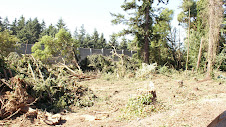
Loss Looms In Seattle's Urban Forest
Thursday, December 2, 2010
Subscribe to:
Comments (Atom)
